Urban Forest Management Plan Update

Share Urban Forest Management Plan Update on Facebook Share Urban Forest Management Plan Update on X (formerly Twitter) Share Urban Forest Management Plan Update on Linkedin Email Urban Forest Management Plan Update link
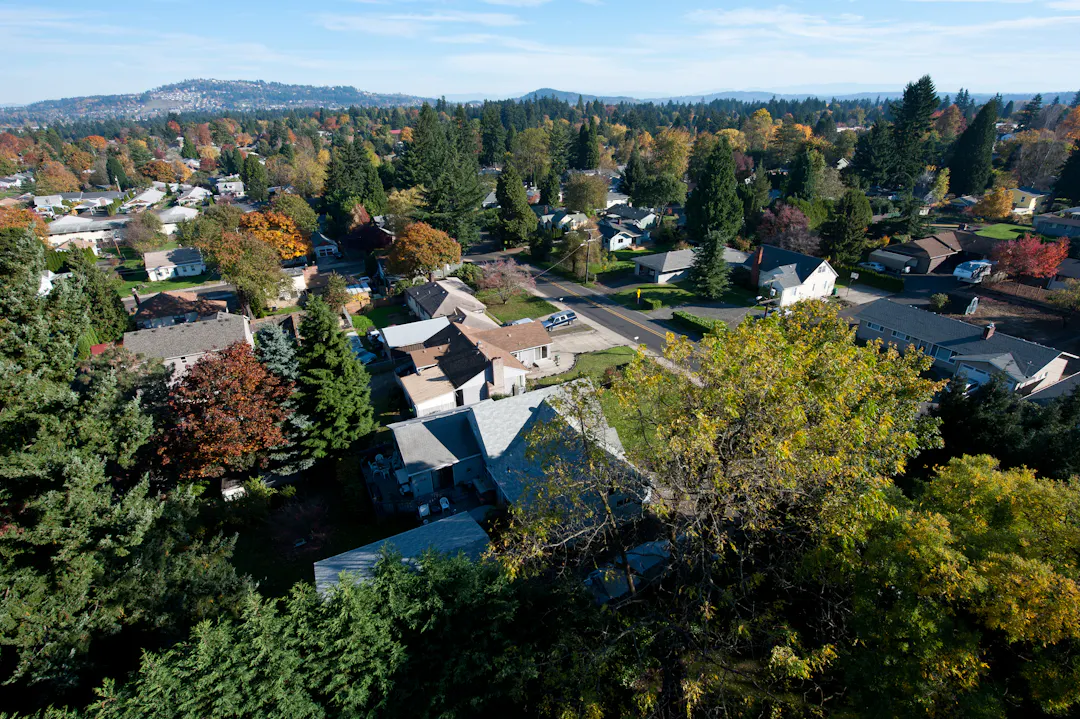
Aerial photo of Milwaukie

Help Us Grow a Better and More Equitable Urban Forest

The city is updating its Urban Forest Management Plan (UFMP) and needs your help. The current plan was developed in 2019 before Milwaukie's Tree Code (2022), influx of middle housing, and the 2021 Pacific Northwest heat dome. The plan is a living document, meant to be updated every five years to incorporate significant shifts in the context, impacts, and constraints that the community is feeling with regards to trees and the urban forest. For a great introduction to this project please visit the Storymap.


Update (Sep. 14, 2026): This project continues with a Public Open House scheduled for Monday, October 5, 2026 (6-8 p.m.).

  • Learn what we have heard so far! Review the Community Engagement Report to learn more prior to the open house.
  • Provide feedback on draft new strategies by participating in interactive opportunities.
  • All attendees will be entered into a VISA gift card raffle
  • Refreshments provided
  • Milwaukie Ledding Library (Community Room), 10660 SE 21st Ave.


You can continue to participate and learn more using the following tools:

  • Submit questions using the Questions tool below as the project proceeds and staff will respond to them.
  • Take a moment to take the fun Quick Poll below
  • Learn more by also checking out the Project Flier or the Project Website.

Thanks so much for participating!


Past opportunities to get involved included the following. Thanks to everyone that participated!

Help Us Grow a Better and More Equitable Urban Forest

The city is updating its Urban Forest Management Plan (UFMP) and needs your help. The current plan was developed in 2019 before Milwaukie's Tree Code (2022), influx of middle housing, and the 2021 Pacific Northwest heat dome. The plan is a living document, meant to be updated every five years to incorporate significant shifts in the context, impacts, and constraints that the community is feeling with regards to trees and the urban forest. For a great introduction to this project please visit the Storymap.


Update (Sep. 14, 2026): This project continues with a Public Open House scheduled for Monday, October 5, 2026 (6-8 p.m.).

  • Learn what we have heard so far! Review the Community Engagement Report to learn more prior to the open house.
  • Provide feedback on draft new strategies by participating in interactive opportunities.
  • All attendees will be entered into a VISA gift card raffle
  • Refreshments provided
  • Milwaukie Ledding Library (Community Room), 10660 SE 21st Ave.


You can continue to participate and learn more using the following tools:

  • Submit questions using the Questions tool below as the project proceeds and staff will respond to them.
  • Take a moment to take the fun Quick Poll below
  • Learn more by also checking out the Project Flier or the Project Website.

Thanks so much for participating!


Past opportunities to get involved included the following. Thanks to everyone that participated!

Have a question about the Urban Forest Management Plan Update? Submit them here and staff will answer them.

You need to be signed in to add your question.

  • Share When and how are tree cutting companies and landscapers brought into this dicsussion? on Facebook Share When and how are tree cutting companies and landscapers brought into this dicsussion? on X (formerly Twitter) Share When and how are tree cutting companies and landscapers brought into this dicsussion? on Linkedin Email When and how are tree cutting companies and landscapers brought into this dicsussion? link

    When and how are tree cutting companies and landscapers brought into this dicsussion?

    David Aschenbrenner asked 14 days ago

    Great question, they are important stakeholders to engage. Over the last 6 months, Milwaukie's Tree Board has conducted stakeholder interviews to understand developers and contract arborists experience with the tree code. Tree Board will continue this engagement to improve Urban Forestry's service delivery and identify new education opportunities. Let us know if you have specific companies in mine and we will add them to our outreach.

  • Share What is the plan for the forest areas in parks? like Homewood Park? Is there a plan to manage these areas? What parks in Milwaukie have a Forest Plan in effect? on Facebook Share What is the plan for the forest areas in parks? like Homewood Park? Is there a plan to manage these areas? What parks in Milwaukie have a Forest Plan in effect? on X (formerly Twitter) Share What is the plan for the forest areas in parks? like Homewood Park? Is there a plan to manage these areas? What parks in Milwaukie have a Forest Plan in effect? on Linkedin Email What is the plan for the forest areas in parks? like Homewood Park? Is there a plan to manage these areas? What parks in Milwaukie have a Forest Plan in effect? link

    What is the plan for the forest areas in parks? like Homewood Park? Is there a plan to manage these areas? What parks in Milwaukie have a Forest Plan in effect?

    David Aschenbrenner asked about 1 month ago

    Great question! Many residents raised similar questions throughout this engagement. In response, we have integrated a new draft strategy and benchmark to increase tree canopy in our parks and natural areas. The draft updated strategies will be shared at the upcoming Urban Forest Open House on Monday, October 5, to get additional community feedback. Hope you can join us!

    Urban Forest Open House- Monday, October 5, from 6-8pm at the Ledding Library Community Room 

  • Share My wife and I are avid gardeners. We plant trees everywhere we live, fruit, ornamental and shade. What makes us frustrated about tree planting in residential neighborhoods is tree choice does not take into considerate possible solar power or gardening of our neighbors. Not only is it fine for people to plant doug firs and sequoias that ruin any possibility of a vegatable garden or solar power for their neighbors, it seems encouraged to do this. We all talk about global warming but the current tree plan of allowing 60 to 150 foot trees makes it impossible to impliment the most valuable actions. With our tree plan we need height limits. In addition I had two 120 foot doug firs I took out some years ago. They had rot from a lightening strike 20 years ago and would loose 20 foot branches to fall on my roof. It cost $10,000 to have it removed. doug firs, sequoias, and other very tall trees are bad for residential neighborhoods. on Facebook Share My wife and I are avid gardeners. We plant trees everywhere we live, fruit, ornamental and shade. What makes us frustrated about tree planting in residential neighborhoods is tree choice does not take into considerate possible solar power or gardening of our neighbors. Not only is it fine for people to plant doug firs and sequoias that ruin any possibility of a vegatable garden or solar power for their neighbors, it seems encouraged to do this. We all talk about global warming but the current tree plan of allowing 60 to 150 foot trees makes it impossible to impliment the most valuable actions. With our tree plan we need height limits. In addition I had two 120 foot doug firs I took out some years ago. They had rot from a lightening strike 20 years ago and would loose 20 foot branches to fall on my roof. It cost $10,000 to have it removed. doug firs, sequoias, and other very tall trees are bad for residential neighborhoods. on X (formerly Twitter) Share My wife and I are avid gardeners. We plant trees everywhere we live, fruit, ornamental and shade. What makes us frustrated about tree planting in residential neighborhoods is tree choice does not take into considerate possible solar power or gardening of our neighbors. Not only is it fine for people to plant doug firs and sequoias that ruin any possibility of a vegatable garden or solar power for their neighbors, it seems encouraged to do this. We all talk about global warming but the current tree plan of allowing 60 to 150 foot trees makes it impossible to impliment the most valuable actions. With our tree plan we need height limits. In addition I had two 120 foot doug firs I took out some years ago. They had rot from a lightening strike 20 years ago and would loose 20 foot branches to fall on my roof. It cost $10,000 to have it removed. doug firs, sequoias, and other very tall trees are bad for residential neighborhoods. on Linkedin Email My wife and I are avid gardeners. We plant trees everywhere we live, fruit, ornamental and shade. What makes us frustrated about tree planting in residential neighborhoods is tree choice does not take into considerate possible solar power or gardening of our neighbors. Not only is it fine for people to plant doug firs and sequoias that ruin any possibility of a vegatable garden or solar power for their neighbors, it seems encouraged to do this. We all talk about global warming but the current tree plan of allowing 60 to 150 foot trees makes it impossible to impliment the most valuable actions. With our tree plan we need height limits. In addition I had two 120 foot doug firs I took out some years ago. They had rot from a lightening strike 20 years ago and would loose 20 foot branches to fall on my roof. It cost $10,000 to have it removed. doug firs, sequoias, and other very tall trees are bad for residential neighborhoods. link

    My wife and I are avid gardeners. We plant trees everywhere we live, fruit, ornamental and shade. What makes us frustrated about tree planting in residential neighborhoods is tree choice does not take into considerate possible solar power or gardening of our neighbors. Not only is it fine for people to plant doug firs and sequoias that ruin any possibility of a vegatable garden or solar power for their neighbors, it seems encouraged to do this. We all talk about global warming but the current tree plan of allowing 60 to 150 foot trees makes it impossible to impliment the most valuable actions. With our tree plan we need height limits. In addition I had two 120 foot doug firs I took out some years ago. They had rot from a lightening strike 20 years ago and would loose 20 foot branches to fall on my roof. It cost $10,000 to have it removed. doug firs, sequoias, and other very tall trees are bad for residential neighborhoods.

    normgr00 asked 5 months ago

    Thank you for sharing your experience and perspective. Your comment will be considered in the Urban Forest Management Plan (UFMP) update. The city will host a public open house to in September, date coming soon, to review all feedback received and how it was considered in the proposed UFMP update.

    If you have additional feedback or would like to have a discussion regarding Milwaukie's approved tree lists or tree code, please join a Tree Board meeting that are held on the first Wednesday of every month, from 5:30-7:00pm at the Public Works Campus. Meeting details can be found on the city calendar, linked here.

Page last updated: 14 Sep 2026, 12:23 PM